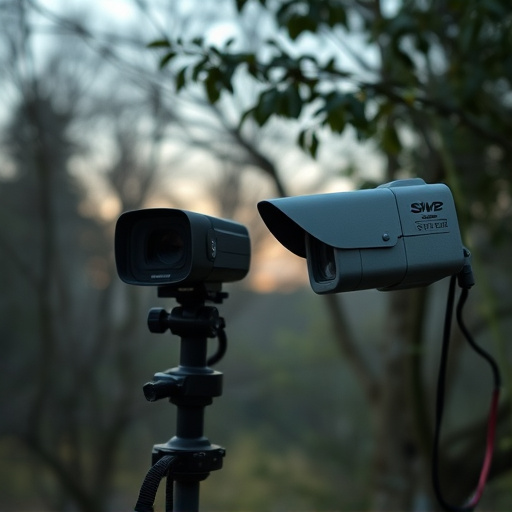
In today's digital age, hidden cameras disguised as everyday objects pose a growing privacy concern. These cameras can be found in various forms and locations. Understanding concealment tactics, staying informed, and using smartphone camera detection apps are crucial for protecting privacy. Smartphone sensors, thermal imaging, UV light scans, and specialized apps offer effective methods to identify these devices. Prioritize safety and legality when searching for hidden cameras, inspecting items for unusual components and using apps responsibly.
Uncover hidden cameras with your smartphone! In today’s digital age, understanding how to detect concealed surveillance devices is crucial. This guide explores diverse methods, from app-based solutions to advanced techniques like thermal imaging and UV light scans. We expose common hiding spots for disguised cameras within everyday objects, empowering you with knowledge to identify potential privacy breaches safely and legally. Discover the tools and tactics to protect your personal spaces from invasive technology.
- Understanding Disguised Cameras: Unveiling Common Concealment Spots
- Smartphone Camera Detection Apps: A Comprehensive Overview
- Utilizing Your Phone's Built-in Features for Hidden Camera Identification
- Advanced Techniques: Thermal Imaging and UV Light Scans
- Best Practices for Safe and Legal Camera Detection
Understanding Disguised Cameras: Unveiling Common Concealment Spots
Hidden cameras, often disguised as everyday objects, have become a growing concern in today’s digital age. These “disguising cameras in everyday objects” can be found in various forms and locations, making it essential to be vigilant. Common spots for concealed cameras include seemingly innocuous items like clocks, light switches, smoke detectors, and even flowers or potted plants.
By understanding the tactics used to conceal these devices, individuals can better protect their privacy. For instance, a camera might be built into a fake power outlet or embedded within a wall clock’s mechanism. Some advanced models can blend in with natural elements, such as a tree branch or rock, making them nearly impossible to detect with the naked eye. Staying informed about these tactics enables people to critically assess their surroundings and take proactive measures to safeguard their personal spaces.
Smartphone Camera Detection Apps: A Comprehensive Overview
Smartphone Camera Detection Apps have become increasingly popular as a tool to uncover hidden cameras, often disguised in everyday objects. These apps leverage advanced image processing algorithms and machine learning techniques to scan for visual anomalies that might indicate the presence of covert recording devices. By analyzing patterns, textures, and lighting conditions, these applications can detect subtle signs that regular cameras might miss.
Many apps offer a range of features, from simple camera testing modes to comprehensive security solutions. Some even incorporate advanced technologies like thermal imaging or infrared scanning to enhance detection capabilities. With the growing concern over privacy and the proliferation of hidden cameras, these smartphone-based tools provide an accessible and effective way for individuals to safeguard their personal spaces.
Utilizing Your Phone's Built-in Features for Hidden Camera Identification
Smartphones, with their advanced sensors and powerful processors, offer a surprising array of tools for detecting hidden cameras. One effective method leverages your phone’s built-in features to identify these clandestine devices. By utilizing the camera’s auto-focus, exposure settings, and motion detection capabilities, you can often spot unusual behavior indicative of a hidden camera. For instance, rapid focusing adjustments or unusual patterns in the image sensor data might suggest a camera is active nearby.
Additionally, scanning for infrared signals, which are common in many hidden cameras disguised as everyday objects like light bulbs or smoke detectors, is another powerful technique. Many smartphones have night modes or infrared-capable cameras that can pick up on these emissions, revealing the presence of disguising cameras in plain sight. This simple yet effective approach allows users to stay vigilant and protect their privacy in today’s tech-driven world where disguising cameras in everyday objects is becoming increasingly common.
Advanced Techniques: Thermal Imaging and UV Light Scans
In the realm of detecting hidden cameras, advanced techniques like thermal imaging and UV light scans have emerged as powerful tools. These methods exploit the fact that many cameras, particularly those disguised in everyday objects, emit heat or reflect UV light differently from their surroundings. Thermal imaging cameras, for instance, can detect variations in temperature, making them effective in identifying electronic devices that generate heat. This is especially useful when dealing with cameras hidden in items like clocks, smoke detectors, or even decorative stones, where they might be camouflaged to blend in.
UV light scans work on a similar principle but focus on the reflection of ultraviolet radiation. Many hidden cameras are designed with UV-reflective components, and when exposed to UV light, these parts can produce a distinct glow that sets them apart from their surroundings. This technique is particularly effective for detecting miniature cameras often found in gadgets like doorbells or smart mirrors, where they’re cleverly concealed within the device’s interior. By utilizing these advanced methods, users can uncover disguising cameras in everyday objects and ensure a higher level of privacy protection.
Best Practices for Safe and Legal Camera Detection
When attempting to detect hidden cameras using a smartphone, it’s crucial to employ safe and legal practices to protect your privacy and avoid potential legal pitfalls. Start by scrutinizing everyday objects for any unusual components or connectors that could indicate a camera’s presence. Many modern devices incorporate tiny cameras into seemingly innocuous items like pens, clocks, and even clothing, making them excellent disguises. Be vigilant in checking these items’ physical attributes, such as the placement of buttons, ports, or subtle markings, which might give away their true purpose.
Additionally, using specialized smartphone apps designed for camera detection can be a legitimate approach. These tools often employ advanced image recognition algorithms to scan for visual anomalies that could suggest hidden cameras. Ensure, however, that you only use such apps on your own property or with explicit permission from the owner to avoid invading others’ privacy. Always stay within the bounds of the law and respect personal boundaries.
In conclusion, detecting hidden cameras has become an essential skill in today’s digital age, where disguising cameras in everyday objects is common. By understanding common concealment spots and leveraging smartphone apps, built-in features, thermal imaging, and UV light scans, you can proactively identify these devices. Always adhere to legal boundaries and safety practices when engaging in camera detection, ensuring your efforts remain ethical and responsible.